

Last updated: October 3, 2026
ITOR stands for Inventory Turnover Ratio. In retail, it's a critical metric that shows how effectively a store chain, business, or company manages its inventory: how often goods are sold and replenished over a specific period, whether monthly, quarterly, or annually. A higher ITOR points to efficient inventory management and strong sales. A lower ITOR usually signals overstocking, weak demand, or stock piling up where it shouldn't.
What Is ITOR?
ITOR (Inventory Turnover Ratio) measures how often a retailer sells and replaces its inventory over a given period. It's one of the clearest ways to evaluate sales efficiency, catch trends early, and keep supply balanced against actual demand.
- A high ITOR points to strong sales or efficient inventory management: goods aren't sitting around, they're moving.
- A low ITOR can signal overstocking or weak demand, and it's usually a sign of money tied up in stock that isn't selling.
ITOR Formula: How to Calculate It
The formula is straightforward:
ITOR = Cost of Goods Sold (COGS) ÷ Average Inventory
COGS is the direct cost of producing the goods sold over the period:
COGS = Beginning Inventory + Purchases During the Period − Ending Inventory
Average Inventory is the mean value of inventory held during the period:
Average Inventory = (Beginning Inventory + Ending Inventory) ÷ 2
Example:
- COGS = $500,000
- Average Inventory = $100,000
- ITOR = $500,000 ÷ $100,000 = 5
This means the store sells and replenishes its entire inventory five times a year.
One distinction worth keeping in mind: ITOR measures how quickly goods move through the business. It's not a physical stock-take, it's a measure of turnover, not a count of items on a shelf.
How ITOR Works in Retail
ITOR works as a quick read on operational efficiency and overall chain performance in a competitive retail and supplier environment.
- Improving inventory management. ITOR flags slow-moving or unsold products, which lets a retailer cut waste and the costs that come with holding dead stock.
- Monitoring trends and preferences. ITOR highlights which goods move fast, which helps store managers set realistic KPIs and keep the assortment aligned with what customers actually want.
- Boosting cash flow. Efficient inventory turnover frees up capital that can go straight into marketing or new products instead of sitting in a warehouse.
Why ITOR Matters for Store Managers' KPIs
ITOR isn't just a number on a report, it's a direct indicator of performance:
- A high ITOR reflects fast sales and keeps stock from stagnating.
- A slow turnover ties up capital and puts pressure on day-to-day operations.
- Steady inventory rotation keeps popular products in stock, which shows up directly in customer satisfaction.
Managers who actively work to improve ITOR are working on something that moves profitability directly, not a vanity metric.
Why ITOR Matters for Retailers and Store Chains
At the chain level, ITOR reflects how often inventory turns over across every location, not just one store. Understanding ITOR alongside other KPIs helps store managers spot:
- Low-demand products quietly stagnating in stock.
- Items racking up storage costs that don't justify keeping them around.
That visibility makes it possible to adapt the assortment to what customers actually want right now, not what the plan assumed six months ago. And a high ITOR generates cash flow that can be reinvested elsewhere in the business, in marketing, in product development, in opening the next store. Over the long run, ITOR is one of the clearer signals for planning and growth in retail.
How BI Makes ITOR More Useful
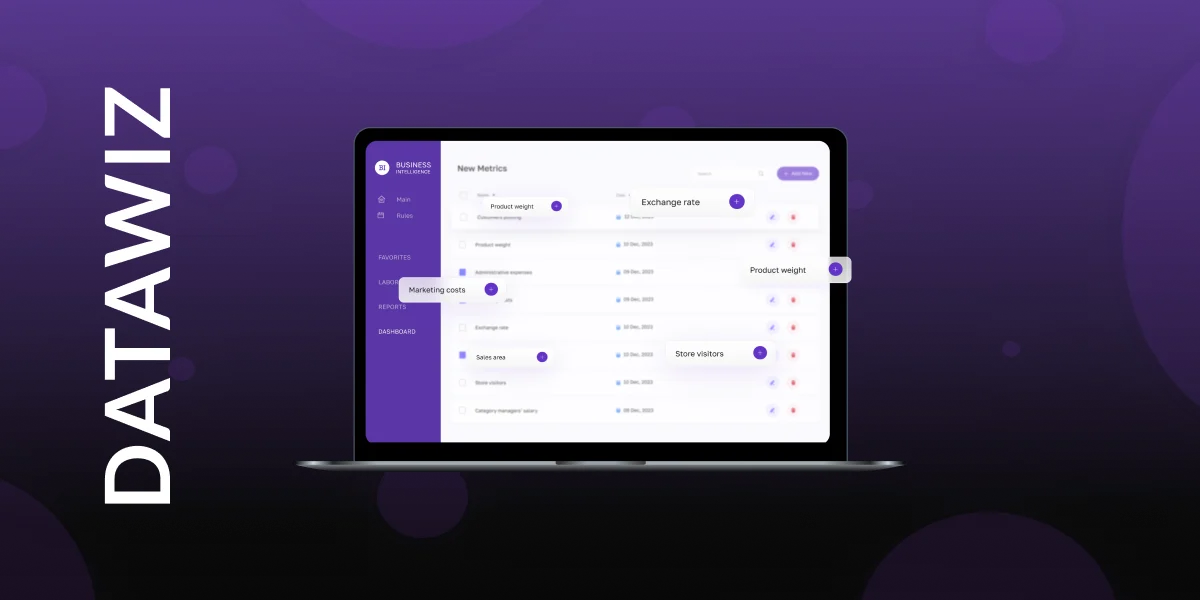
Tracking ITOR by hand works for one store. It breaks down fast across a chain. This is where Business Intelligence (BI) tools like Datawiz BI come in, by simplifying the analysis of ITOR and other key retail metrics so decisions can actually be made on current data rather than last quarter's spreadsheet.
A BI platform adds four things a manual process can't match:
- Real-time data analysis. Accurate ITOR calculations built on live inventory data, not a snapshot from last week.
- Trend identification. Watching ITOR move over time surfaces seasonal patterns and market shifts before they become a problem.
- Granular insights. Breaking ITOR down by category or by store makes optimization targeted instead of guesswork.
- Automated reporting. Datawiz BI calculates ITOR automatically and presents it in dashboards that don't need a spreadsheet to interpret.
How to Optimize ITOR in Retail
A few concrete ways to move ITOR in the right direction:
- Use a BI platform. Tools like Datawiz BI automate ITOR tracking and surface the insights worth acting on, instead of leaving them buried in a report nobody opens.
- Forecast demand. Historical sales data, run through the right algorithms, keeps inventory levels aligned with actual demand patterns rather than guesswork.
- Monitor across levels. Checking ITOR at the store, regional, and category level catches discrepancies that a single chain-wide number would hide.
- Benchmark against competitors. Comparing your ITOR to industry standards shows whether a number that looks fine in isolation is actually behind where it should be.
- Work closely with suppliers. ITOR data gives you a stronger position to negotiate better terms and tighten up the supply chain on the products that need it most.
FAQ
What does ITOR mean?
ITOR stands for Inventory Turnover Ratio. It's a retail metric that measures how often a business sells and replenishes its inventory over a given period, such as a month, quarter, or year.
What is the ITOR formula?
ITOR = Cost of Goods Sold (COGS) ÷ Average Inventory. For example, if COGS is $500,000 and average inventory is $100,000, ITOR equals 5, meaning the inventory turned over five times during the period.
How do you calculate ITOR?
Divide the cost of goods sold for the period by the average inventory held during that same period. Average inventory is usually calculated as (beginning inventory + ending inventory) ÷ 2.
What is a good ITOR?
It depends on the industry and the type of goods sold, but a higher ITOR generally points to efficient inventory management and strong sales, while a low ITOR can mean overstocking or weak demand. Compare your own ITOR over time and against similar retailers rather than a single universal benchmark.
Is ITOR the same as inventory turnover ratio?
Yes. ITOR is simply the abbreviation for inventory turnover ratio. They describe the exact same metric and use the exact same formula.

Make decisions based on real data with Datawiz BI



 No credit card required