Loyalty Program Analytics for Retail Chains
Analyze, optimize, and scale your loyalty programs with accurate reports and up-to-date data.
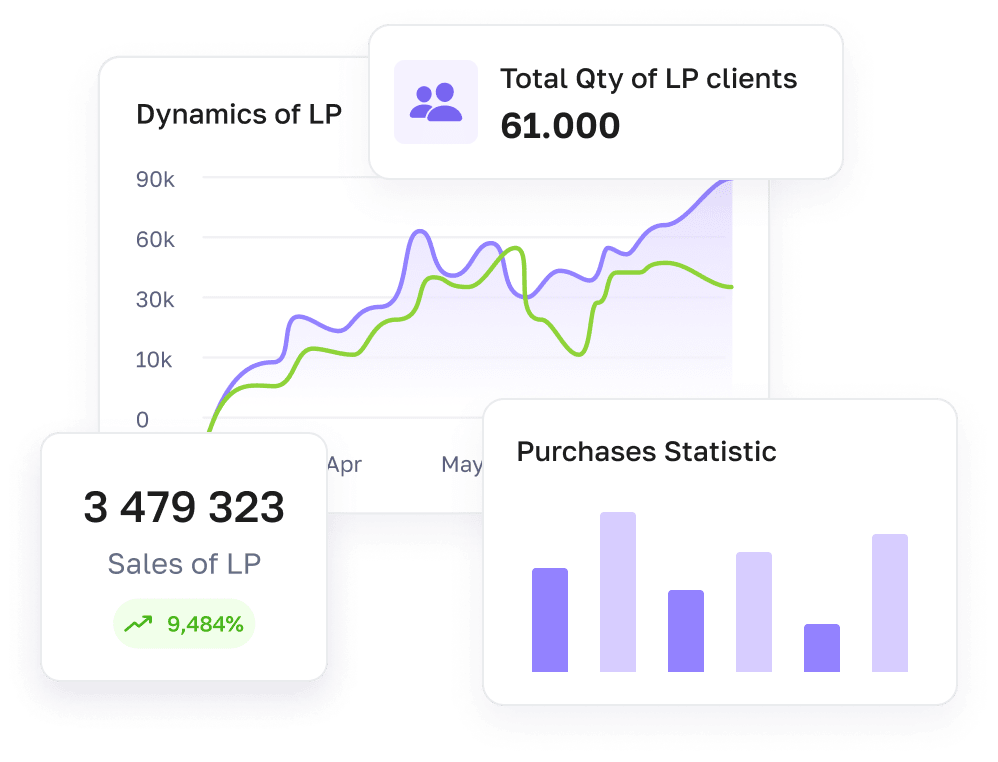
Key benefits of analyzing your loyalty program’s performance

Optimizing marketing spend through precise targeting

Optimizing your budget by focusing on your existing customer base

Clearly identifying your most valuable customers (via RFM analysis or other metrics)

Gaining a competitive edge with deep insights into loyalty program mechanics

Boosting visit frequency and repeat purchases through customer segmentation

The assortment is customized to the actual interests of the target customers
Datawiz BI adapts to the needs of different retail businesses

Grocery stores

Clothing and accessories

Construction stores

Electronics stores

Perfume and cosmetics stores

Furniture and decor stores

Children's goods stores
Ready-made reports that reveal your loyalty program’s performance
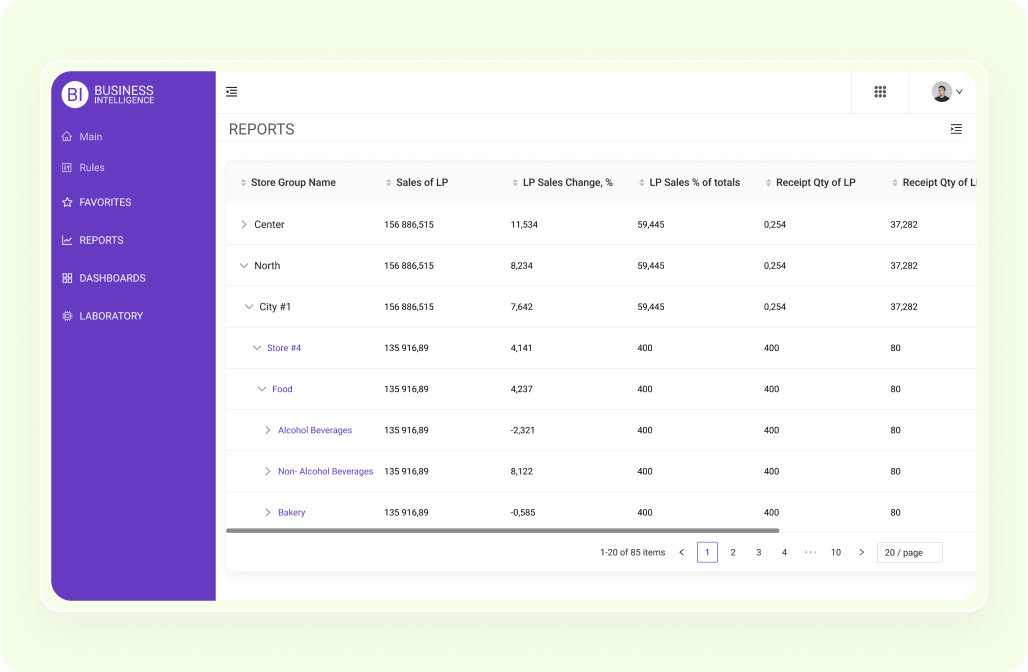
Loyalty program effectiveness
Analyze the effectiveness of your loyalty program at all levels - from region to SKU. The report summarizes key metrics, displays the share of the loyalty program in total chain sales, and allows you to conveniently compare performance for two periods through visualization.
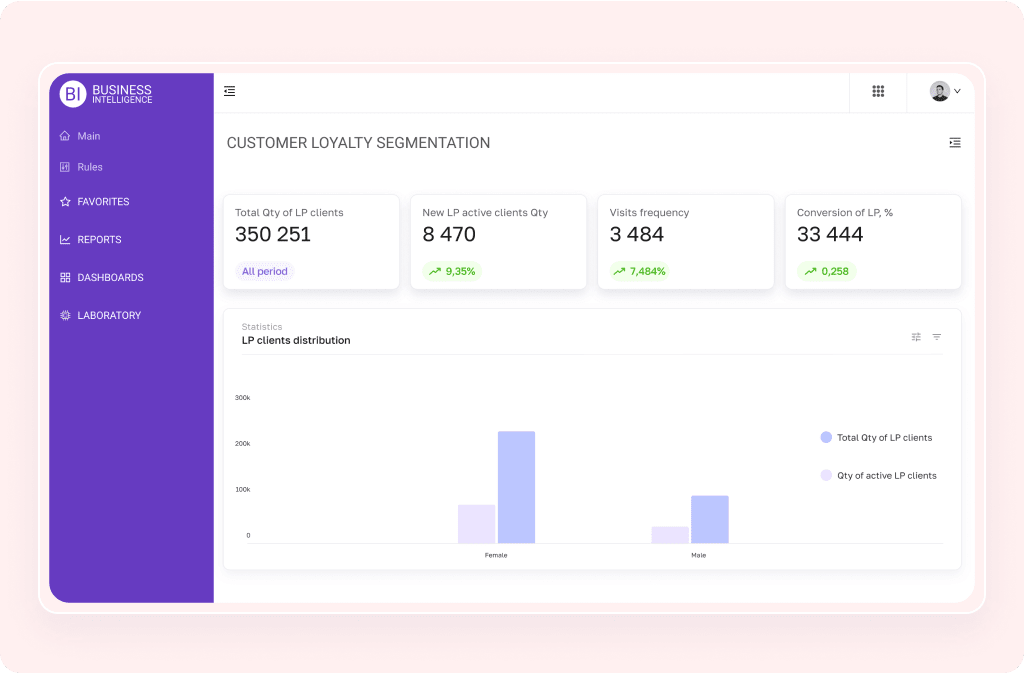
Loyalty program statistics
The report focuses on indicators that reflect the current state of the loyalty system: customer base growth, customer activity, purchase frequency, average turnover, and conversion rate. Informative cards with clear visual indicators help to assess the effectiveness of the program in the selected period in a minute and respond to changes in a timely manner.
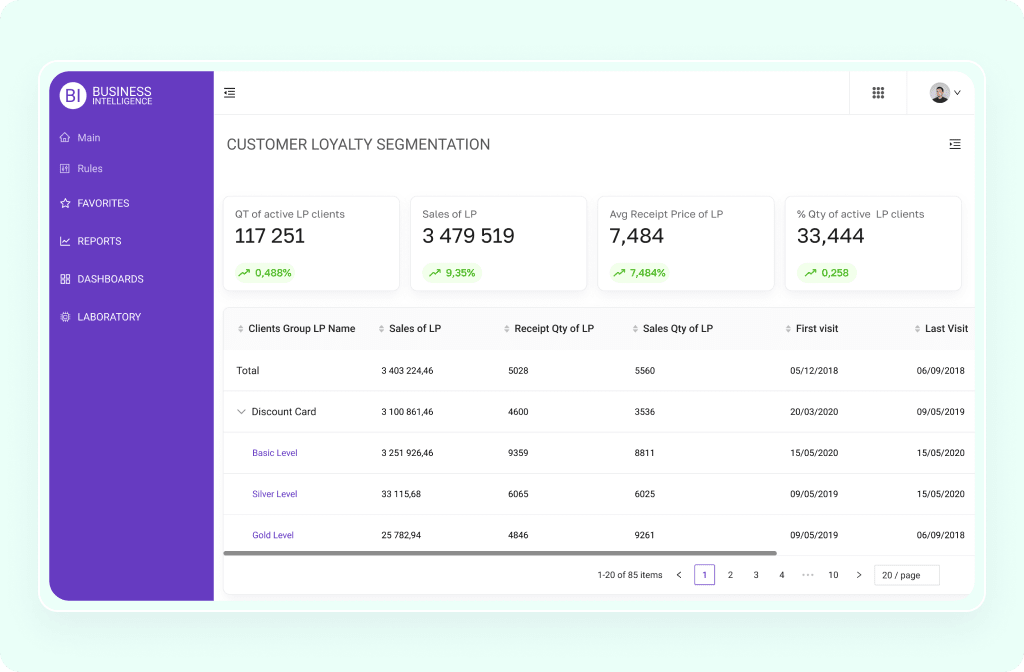
Segmentation of loyalty program clients
Create target groups of customers based on their actions and evaluate the effectiveness of working with them. The report allows you to form customer segments of the loyalty program by purchase frequency, average check, turnover, and other parameters. In-depth sales analysis is available for each group - from general indicators to specific products.
Loyalty program client card
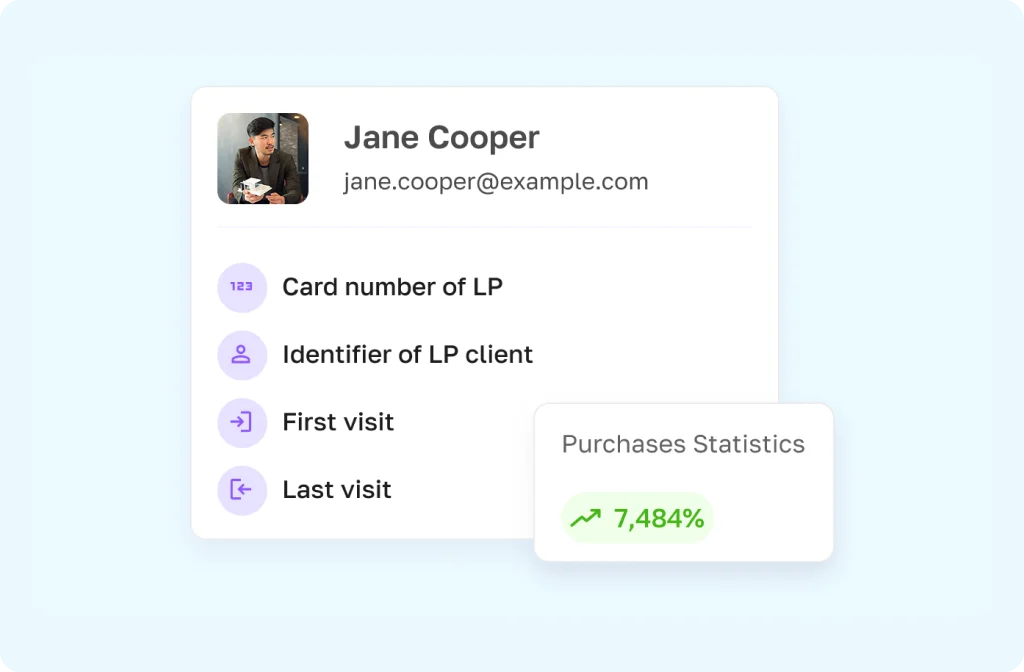
Create personalized offers and effective marketing campaigns for your most valuable customers. The report provides a complete picture of each customer's behavior: from basic information (card number, contact details, first and last visit) to detailed purchase statistics by category and SKU. Thanks to the visualization of purchase dynamics, you can assess changes in customer activity over the selected period.
Q&A
Loyalty program analytics is the process of measuring and interpreting how a retail loyalty program affects customer behavior, purchase frequency, average spend, and overall chain revenue. It helps retailers move beyond simply running a loyalty program to understanding which mechanics actually work, which customer segments generate the most value, and where marketing budgets should be focused for maximum return.
Datawiz BI includes a dedicated set of reports for loyalty program analysis that cover program effectiveness, customer base statistics, client segmentation, and individual customer profiles. All reports are built into the platform and update automatically, giving marketing and category teams a real-time view of loyalty program performance without manual data exports or spreadsheet work.
RFM analysis segments loyalty program customers based on three dimensions: Recency (how recently they purchased), Frequency (how often they buy), and Monetary value (how much they spend). Datawiz BI applies RFM analysis within the Client Segmentation report to help retailers identify their most valuable customers, detect customers at risk of churning, and design targeted campaigns for each segment — rather than applying the same marketing approach to the entire customer base.
By identifying which customer segments drive the most revenue and how different groups respond to promotions, Datawiz BI allows marketing teams to concentrate budgets on high-value existing customers rather than broad acquisition campaigns. Segment-level analysis makes it possible to design personalized offers that match actual purchase behavior, increasing campaign relevance and reducing wasted spend on customers unlikely to respond.
The Client Segmentation report in Datawiz BI allows retailers to create customer groups based on any combination of parameters — purchase frequency, average check, total turnover, product preferences, and more. Each segment can then be analyzed in depth, from aggregate sales figures down to the specific products that segment buys most often, enabling precise targeting for promotions and assortment decisions.
Datawiz BI loyalty analytics is designed to work across a wide range of retail formats, including grocery stores, clothing and accessories, electronics, construction and DIY, perfume and cosmetics, furniture and home decor, and children's goods retailers. The platform adapts report structures and segmentation parameters to fit the specific customer behavior patterns typical for each retail type.
General customer analytics in Datawiz BI covers basket composition, shopping patterns, purchase timing, and behavior trends across all shoppers, including those without loyalty cards. Loyalty program analytics focuses specifically on identified customers who are enrolled in the program, enabling individual-level profiling, long-term behavioral tracking, segment comparison, and personalized marketing that is not possible with anonymous transaction data alone.

 No credit card required