Аналитика программ лояльности
Анализируйте, оптимизируйте и масштабируйте программы лояльности с точными отчетами и аккуратными данными
Основные преимущества анализа эффективности программы лояльности

Оптимизация маркетинговых расходов через точное таргетирование

Оптимизация бюджета через работу с существующей клиентской базой

Четкое определение самых ценных клиентов (через RFM-анализ или другие метрики)

Конкурентное преимущество благодаря глубокому пониманию эффективных механик лояльности

Увеличение частоты визитов и повторных покупок через сегментацию клиентов

Ассортимент подстроен под фактические интересы целевых покупателей
Datawiz BI адаптируется к потребностям различных ритейл-бизнесов

Продуктовые сети

Одежда и аксессуары

Строительные магазины

Магазины электроники

Сети парфюмерии и косметики

Магазины мебели и декора

Магазины детских товаров
Готовые отчеты, раскрывающие результативность программы лояльности
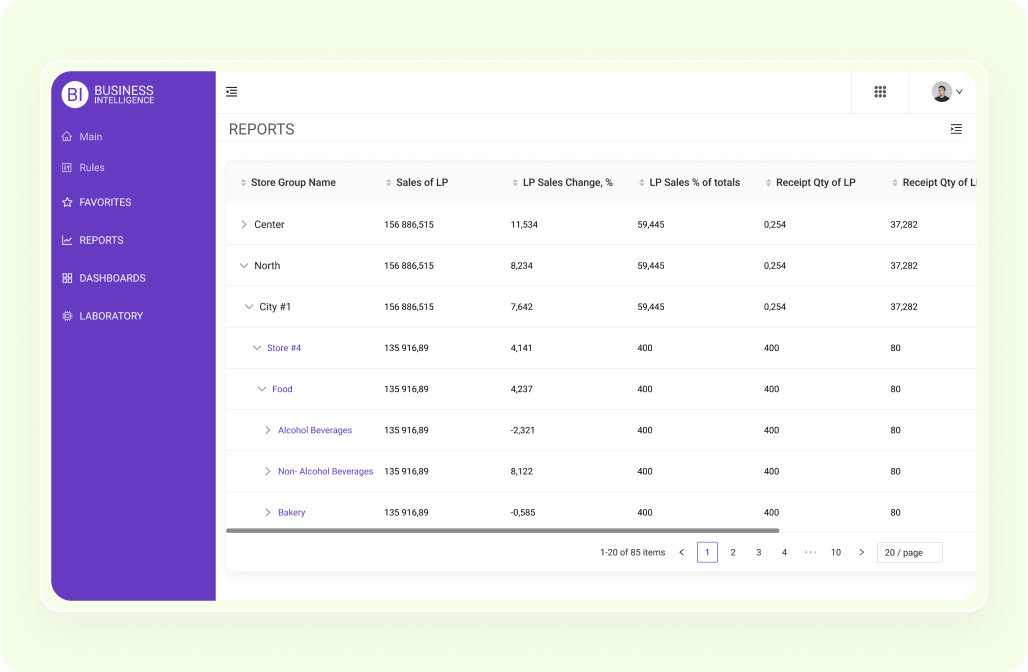
Эффективность программы лояльности
Анализируйте эффективность программы лояльности на всех уровнях - от региона до отдельного товара. Отчет представляет ключевые метрики, отображает долю программы лояльности в общих продажах сети и позволяет удобно сравнивать показатели за два периода благодаря визуализации.
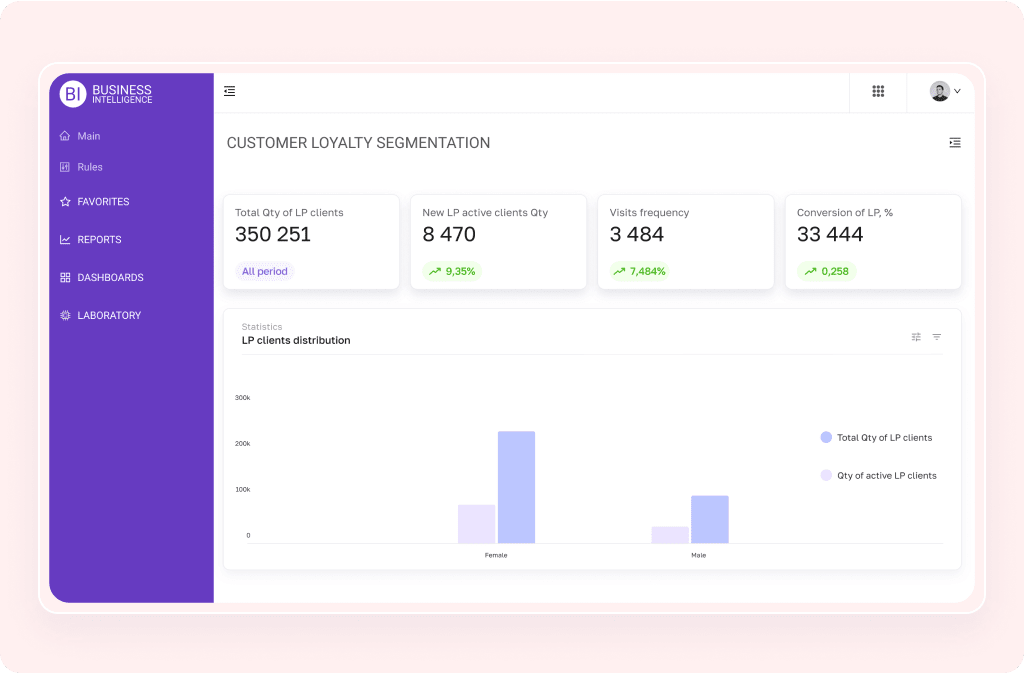
Статистика программы лояльности
Отчет сосредоточен на показателях, отражающих текущее состояние системы лояльности: рост базы клиентов, их активность, частоту покупок, средний оборот и уровень конверсии. Информативные карточки с четкими визуальными индикаторами помогают за минуту оценить эффективность программы в выбранном периоде и вовремя реагировать на изменения.
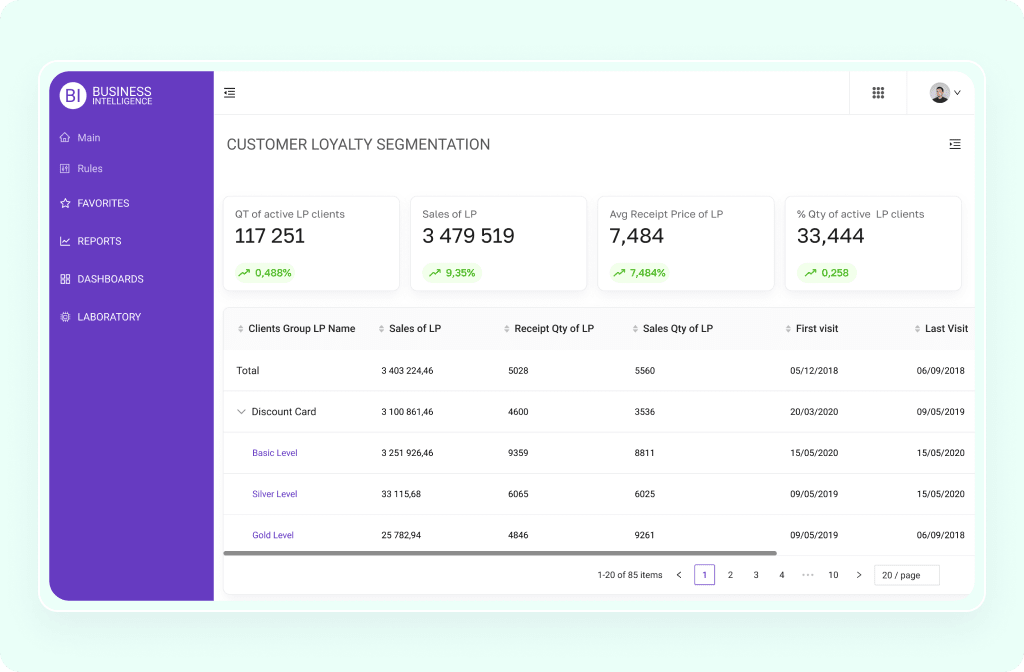
Сегментация клиентов программы лояльности
Создавайте целевые группы покупателей на основе их действий и оценивайте эффективность работы с ними. Отчет позволяет формировать сегменты клиентов программы лояльности по частоте покупок, среднему чеку, обороту и другим параметрам. Для каждой группы доступен глубокий анализ продаж - от общих показателей до конкретных товаров.
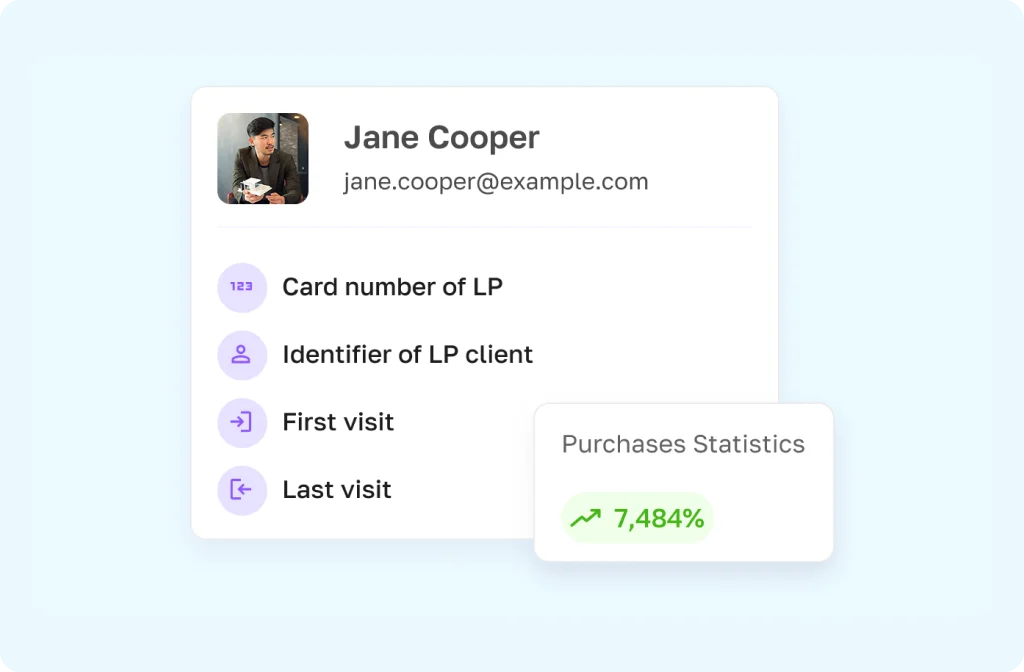
Карточка клиента программы лояльности
Создавайте персонализированные предложения и эффективные маркетинговые кампании для самых ценных клиентов. Отчет предоставляет полную картину поведения каждого клиента: от базовой информации (номер карты, контактные данные, первый и последний визит) до детальной статистики покупок по категориям и SKU. Благодаря визуализации динамики покупок вы можете оценить изменения в активности клиента за выбранный период.
Q&A
Loyalty program analytics is the process of measuring and interpreting how a retail loyalty program affects customer behavior, purchase frequency, average spend, and overall chain revenue. It helps retailers move beyond simply running a loyalty program to understanding which mechanics actually work, which customer segments generate the most value, and where marketing budgets should be focused for maximum return.
Datawiz BI includes a dedicated set of reports for loyalty program analysis that cover program effectiveness, customer base statistics, client segmentation, and individual customer profiles. All reports are built into the platform and update automatically, giving marketing and category teams a real-time view of loyalty program performance without manual data exports or spreadsheet work.
RFM analysis segments loyalty program customers based on three dimensions: Recency (how recently they purchased), Frequency (how often they buy), and Monetary value (how much they spend). Datawiz BI applies RFM analysis within the Client Segmentation report to help retailers identify their most valuable customers, detect customers at risk of churning, and design targeted campaigns for each segment — rather than applying the same marketing approach to the entire customer base.
By identifying which customer segments drive the most revenue and how different groups respond to promotions, Datawiz BI allows marketing teams to concentrate budgets on high-value existing customers rather than broad acquisition campaigns. Segment-level analysis makes it possible to design personalized offers that match actual purchase behavior, increasing campaign relevance and reducing wasted spend on customers unlikely to respond.
The Client Segmentation report in Datawiz BI allows retailers to create customer groups based on any combination of parameters — purchase frequency, average check, total turnover, product preferences, and more. Each segment can then be analyzed in depth, from aggregate sales figures down to the specific products that segment buys most often, enabling precise targeting for promotions and assortment decisions.
Datawiz BI loyalty analytics is designed to work across a wide range of retail formats, including grocery stores, clothing and accessories, electronics, construction and DIY, perfume and cosmetics, furniture and home decor, and children's goods retailers. The platform adapts report structures and segmentation parameters to fit the specific customer behavior patterns typical for each retail type.
General customer analytics in Datawiz BI covers basket composition, shopping patterns, purchase timing, and behavior trends across all shoppers, including those without loyalty cards. Loyalty program analytics focuses specifically on identified customers who are enrolled in the program, enabling individual-level profiling, long-term behavioral tracking, segment comparison, and personalized marketing that is not possible with anonymous transaction data alone.

 Банковская карта не нужна!