 Co nowego?


Brick-and-mortar retail chains must synchronize critical store operations every day — from what happens at the checkout to how stock is replenished and how promotions are executed on the floor. Without a unified operational backbone, inconsistencies emerge, margins erode, and managers spend more time reacting to problems than preventing them.
A retail operating system creates a central command center for all these moving parts, weaving sales, inventory, and promotional processes into a coordinated operational flow. This not only streamlines performance but also helps retail leaders make informed decisions based on real data.
What Is a Retail Operating System?
A retail operating system (ROS) is a centralized architecture that integrates key retail functions — transactional processing at checkout, inventory tracking, purchasing, pricing updates, promotions, and analytics — into a single operational ecosystem.
At the core of an ROS is the ability to unify data and automate workflows across physical stores. Instead of disparate systems that don’t communicate, a retail operating system ensures:
- Consistent application of pricing and discounts
- Accurate and synchronized stock levels across stores
- Centralized performance monitoring
- Common rules for promotions and reporting
By standardizing these elements, retailers avoid fragmented store performance and gain control over operational outcomes.
Key Benefits of a Retail Operating System
Implementing a retail operating system delivers measurable improvements that support store efficiency, profitability, and managerial decision-making.
Unified Store Performance Data
Decisions are driven by a single, reliable source of truth rather than inconsistent spreadsheets or manual reports.
Inventory Visibility and Control
Stock levels are updated instantly across the chain, reducing shrinkage and misplaced inventory.
Automated Operational Workflows
Tasks like purchase order generation, stock reconciliation, and pricing updates happen automatically, freeing teams to focus on strategy.
Promotion Coordination and Margin Protection
Campaign mechanics are centrally controlled and monitored for margin impact, eliminating costly price mismatches.
Consistent Operational Standards
Retail operations platforms enforce common procedures across the chain, resulting in uniform customer experience and reduced errors.
Scalability with Growth
As store chains expand, an ROS supports operational complexity without sacrificing consistency or control.
How Does a Retail Operating System Help Coordinate Sales, Inventory, and Promotions?
The core value of a retail operating system is in the way it brings sales, inventory, and promotions into a unified operational framework.
Sales Coordination
Sales transactions are the primary source of operational data for retailers. When sales are captured at the checkout and integrated into a central system, they immediately become the basis for inventory planning, performance analytics, and margin monitoring.
Central to this process is the Retail POS System, which feeds each transaction into the operational database. This means:
- Every sale reduces stock levels immediately and accurately across the system
- Discounts and pricing adjustments configured centrally apply consistently at the register
- Returns and exchanges are tallied in real time, adjusting stock and performance metrics
- Sales performance metrics update automatically for each store
This connectivity ensures that store managers and regional directors have reliable insights into:
- Sales per SKU and category
- Average basket value and transaction count
- Gross margin contribution by store
- Product performance trends over time
With this level of visibility, retail leaders can detect underperforming products or locations and take action before small issues turn into bigger losses.
Inventory Coordination
Inventory is one of the most critical resources in brick-and-mortar retail. Mismanaged stock — whether excess or depleted — directly impacts profitability.
A robust retail operations software tool integrates stock movements from every physical location into a centralized inventory ledger. This allows:
- Automated replenishment based on actual sales velocity and safety stock requirements
- Balanced stock transfers between stores to prevent localized shortages
- Real-time stock visibility that avoids discrepancies between physical counts and system records
- Supplier lead-time integration so orders are timed to meet demand
Most modern retail operating systems also incorporate predictive demand forecasting, which uses historical sales patterns and seasonality to predict future demand at the store level. This prevents:
- Excess stock that ties up working capital
- Frequent stockouts that frustrate customers
In addition, retail analytics tools like Datawiz — a specialized business intelligence platform — can help retail teams analyze stock imbalances, identify slow-moving items, and build orders that align with actual performance rather than guesswork, improving both availability and inventory turnover.
Promotions Coordination
Promotionsare designed to stimulate sales, but without operational alignment, they can inadvertently erode margins or create stock shortages. Coordination between promotional strategy and execution is vital.
A retail operating system centralizes promotional rules, so:
- Discount mechanics are configured once and deployed to all registers uniformly
- Pricing consistency is maintained across the entire store chain
- System logic ensures promotions are only applied when stock availability supports them
- Performance metricsare tracked to evaluate promotion success
In addition, integrated reporting shows whether promotions are delivering the desired uplift or negatively impacting margin, enabling managers to analyze:
- Incremental sales uplift attributed to specific campaigns
- Margin erosion due to discounting
- Product cannibalizationduring promotions
- Stock depletion during promotional periods
This allows retailers to adjust promotional tactics for maximum impact while controlling inventory risk.
Business Intelligence and Decision Support
Coordinating sales, inventory, and promotions is only effective when embedded within an analytical framework. Business intelligence (BI) turns raw data into actionable insights that help retailers refine their operational strategies.
For example, BI dashboards can reveal:
- Underperforming stores that require operational support
- Stock imbalances leading to lost sales
- Promotions with strong traffic but poor margin performance
- Category trends that suggest assortment adjustments
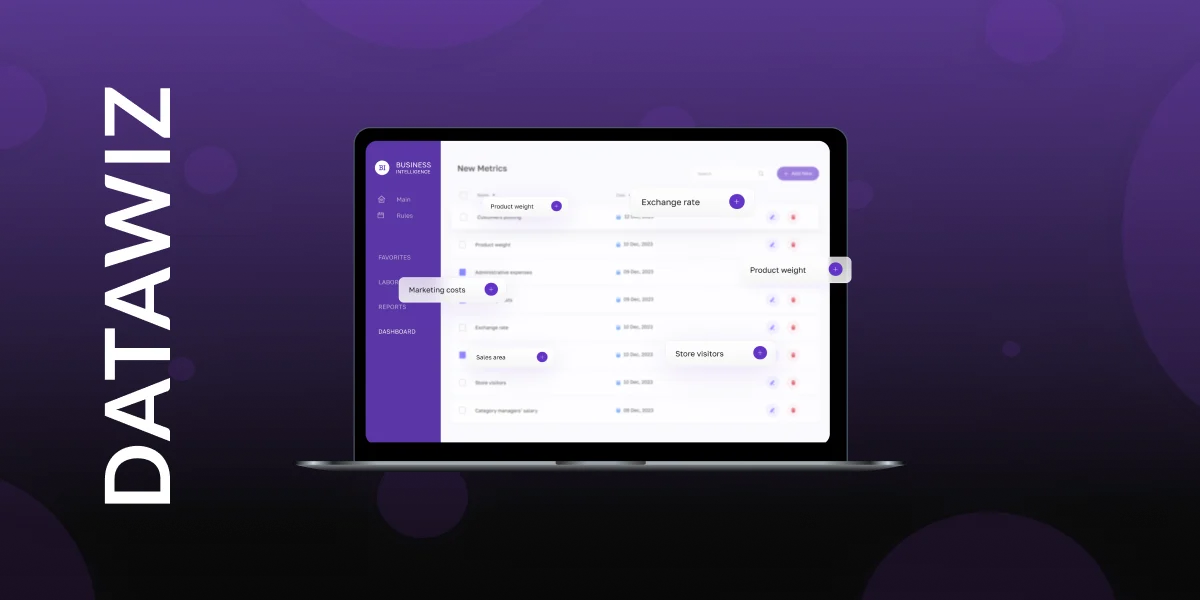
Tools likeDatawiz BIare designed specifically for retail chains. With customizable dashboards, predictive analytics, and real-time reporting, these platforms help retail teams respond quickly to trends and optimize operations on the fly.
Core Features of Retail Operations Software Tools
To support coordinated operational execution across physical stores, retail operations platforms typically include the following capabilities:
- Centralized Transaction and Inventory Database. Ensures all stores operate from the same real-time data set.
- Integrated Retail POS System. Captures every sale and instantly updates stock and performance metrics.
- Automated Replenishment and Purchase Order Logic. Triggers stock orders based on actual demand, avoiding manual ordering delays.
- Demand Forecasting. Uses historical sales data and seasonality for forward-looking planning.
- Promotion Management. Controls price rules and evaluates campaign performance.
- Advanced Reporting and BI Tools. Delivers insights into sales, stock, margin, and staff productivity.
- Multi-Store Governance. Deploys updates and policies consistently across the entire store chain.
FAQ
How can a retail operating system help standardize processes across stores?
By enforcing centralized operational rules — including pricing, stock handling, promotional execution, and reporting formats — across all locations, ensuring all stores follow the same procedures and performance criteria.
What features should a grocery retailer look for in a retail operating system?
A grocery retailer should prioritize real-time stock tracking, perishable goods control with expiration monitoring, automated replenishment, SKU-level analytics, promotion margin tracking, and integrated BI to support fast, data-driven store operations.
How does a retail operating system reduce stockouts?
By combining real-time POS integration with automated replenishment and predictive demand models, the system anticipates stock shortages before they occur and generates purchase orders proactively.
Can a retail operating system improve margin control?
Yes. By linking sales data with cost and promotion information, retailers can monitor gross margin at SKU and store levels, identify unprofitable promotions, and adjust pricing strategies promptly.
How do retail operations platforms support multi-store expansion?
They provide scalable centralized control so pricing rules, stock policies, and reporting structures can be deployed instantly as new stores open, ensuring consistency across the chain.
In retail, coordination across sales, inventory, and promotions is essential for profitability and operational efficiency. A retail operating system brings these functions together into a unified framework that automates routine tasks, delivers real-time visibility, and embeds analytics into everyday decision-making.


 Nie potrzebna karta bankowa!